Storage & handling
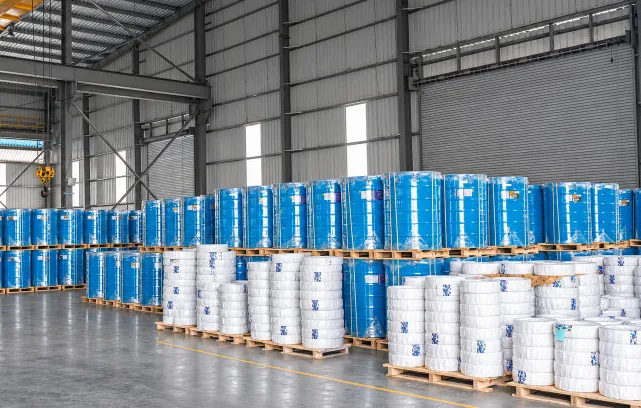
The common rule is first in, first out. Keep wire in its original packaging; wire in a damaged package must be repacked right away, otherwise it may have to be scrapped.
Because the surface is copper coated, SAW wire can be stored for an indefinite period. If the surface gets wet, however, copper coating does not guarantee complete protection against corrosion — store wire inside a building, protected from the weather, and keep it dry during processing.
Avoid sudden, drastic changes in temperature, which cause condensation. In cold months, wire brought from outside into heated rooms stays in its original packaging until it reaches ambient temperature.
Moisture absorption in the original package can be neglected in dry, in-house storage, even after long storage (more than 2 years).
Re-drying of wire is unusual. Wet or oily wire is discarded.
Unused wire is stored in its original package, with the identification label at the wire start, in a dry storage room. Wire without its identification label, and wire with rusty, greasy or oily surfaces, is discarded.
Where required, wire in the welding equipment is protected against chemical attack.
| Unopened bags, drums and big-bags | |
|---|---|
| Temperature | 25 ± 10 °C |
| Relative humidity | As low as possible, not exceeding 70 % |
| Lifetime | Agglomerated flux: max. 3 years after delivery ex factory |
| Unprotected hoppers | Drying cabinet, or heated hopper at 250 ± 25 °C |
| Opened bags or drums | Keep at 250 ± 25 °C before use |
Swipe sideways for all columns →
First in, first out — separating flux types and flux lot numbers, recycled flux included.
Remove moisture and oil from the compressed air of the flux-recovery system.
Add new flux according to actual consumption, to keep close to the original grain size — commonly at least 1 part new flux to 3 parts recovered.
Remove mill scale, dross and uncrushed slag with recovery devices such as sieves or dust separators.
Handled and stored this way, PWL fluxes can normally be used as delivered. For a severe application, as given by the material specification, re-baking is recommended.
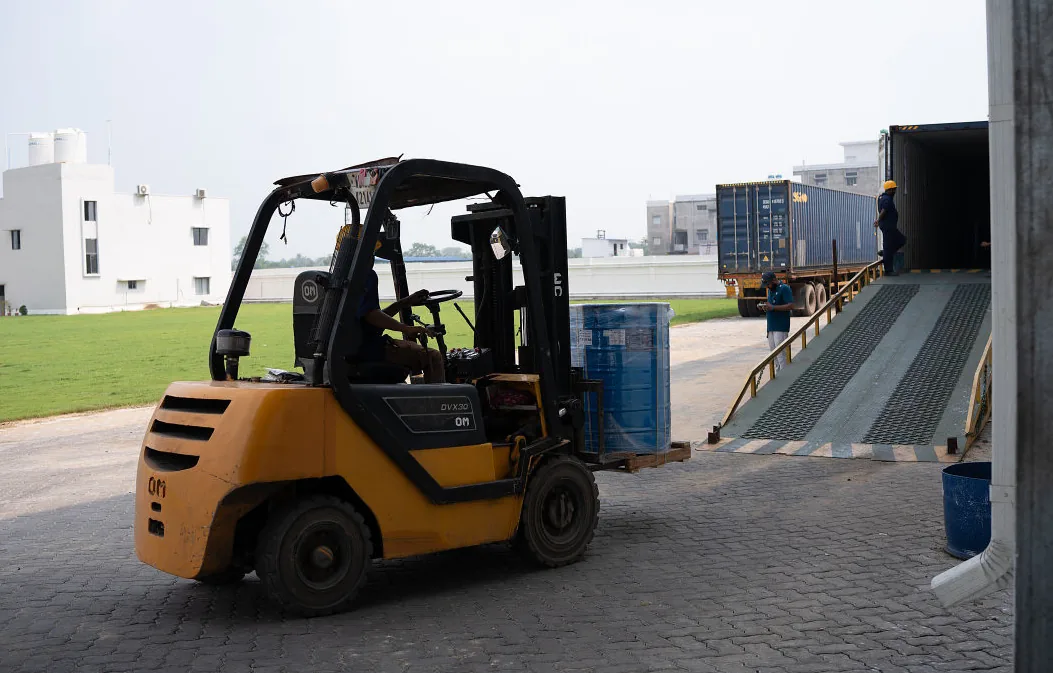
Wire and flux travel in covered vehicles. Unprotected spools, coils and flux containers must not be exposed to direct wetness such as rain or snow.
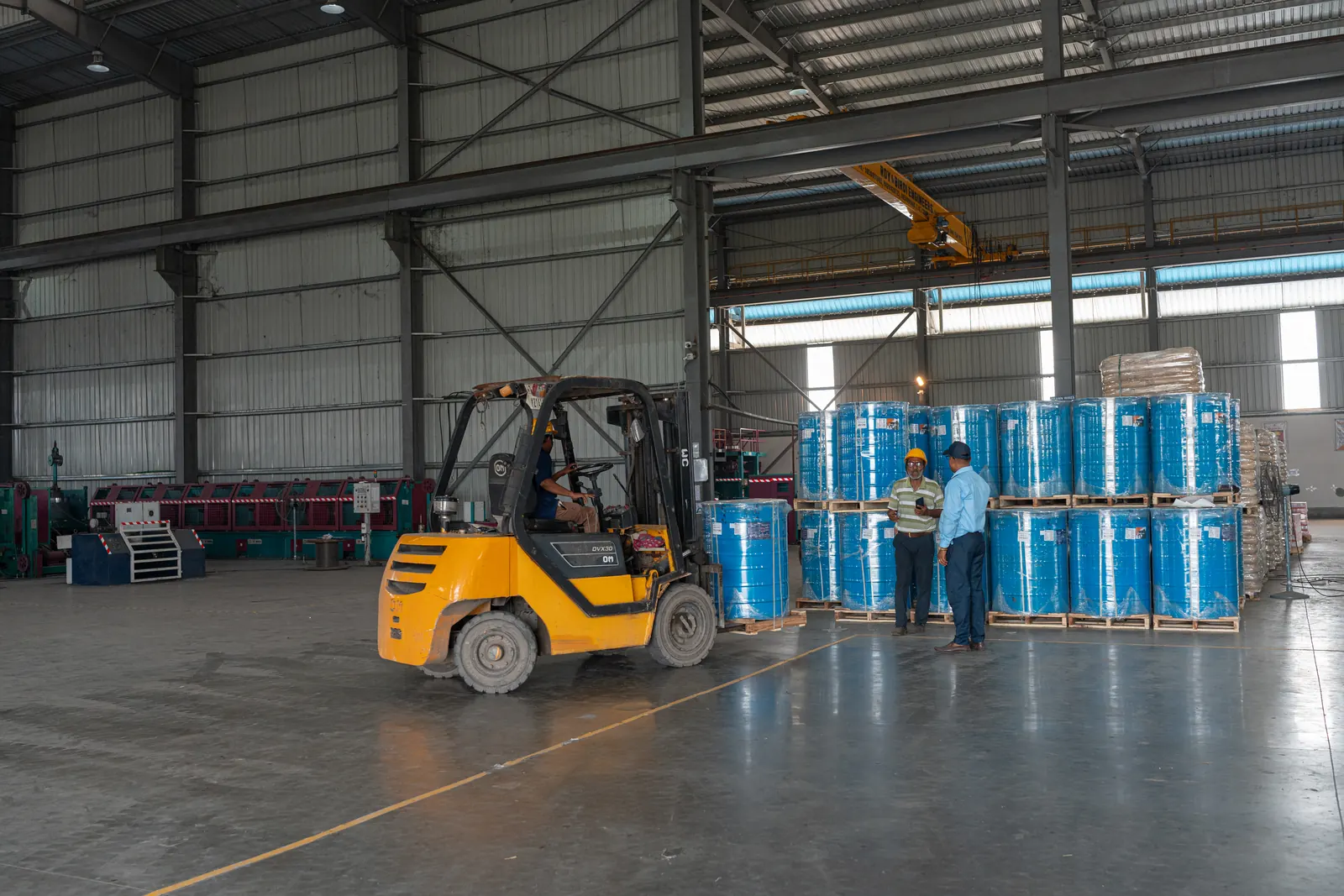
Flux packages are shrink-wrapped in plastic, or kept in dry cardboard or wooden boxes, on undamaged pallets. Damaged containers are repacked within one hour, otherwise scrapped.
A maximum of 2 flux pallets may be stacked without additional supports.
Every coil carries a label inside and outside the package, showing at least: company · grade designation · AWS designation where applicable · lot number · diameter · coil weight · warning to AWS / ANSI Z49 where applicable.
The label at the wire start is kept throughout welding manufacture, for quality control.
| Re-drying | |
|---|---|
| E7018 · E7018-1 · E308L · E309L · E316L | 250 – 300 °C for minimum 1 hr |
Swipe sideways for all columns →